
Gardening at Babylonstoren estate
Franschhoek Valley, Western Cape, South Africa
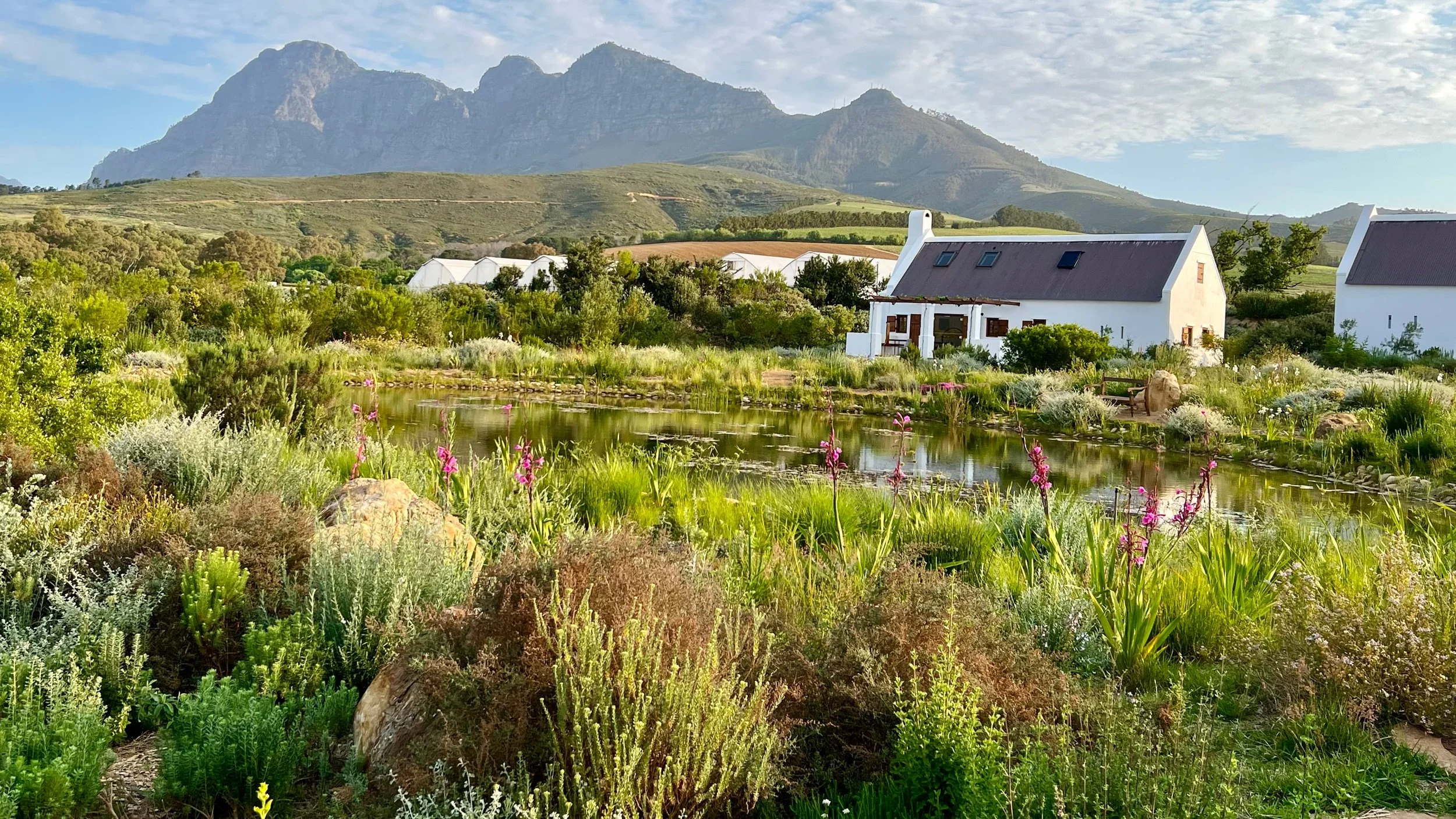
Fynbos cottage gardens - contrived meadow of SA native plants
Some places you visit and some places feel like a second home. Babylonstoren is the latter.
Babylonstoren is one of the oldest Cape Dutch farms in the Western Cape, dating back to 1692. Tucked beneath the Simonsberg mountain, the estate has been restored into one of the most celebrated garden destinations in the world — a working farm, wine estate, and hotel where the garden sits at the center of everything. The garden spans eight acres divided into distinct sections: fruit orchards, vegetable beds, indigenous succulents, a greenhouse, a water garden, and more. It follows a formal geometric layout inspired by historic European kitchen gardens, but what makes it remarkable is that everything actually grows, produces, and feeds the estate's restaurants. It is as functional as it is beautiful.
I was lucky enough to spend several months interning with the garden crew, rotating through different teams and learning from some genuinely talented people. Here's a bit of what that looked like.
The Fruit Team
I spent a good chunk of my time in the orchards, and it was some of the most hands-on, technique-driven work I've done. Pruning stone fruits, apples, pears, quince, persimmons, and citrus — each one with its own rhythm and requirements. Under the direction of then 84 year old Oom (Uncle) Anton, I learned espalier training of fruit trees against the iconic Cape dutch white walls, fruit thinning, and optimal harvesting techniques. There was propagation work too — taking cuttings, grafting, and caring for Oom Anton’s various living furniture projects. He has created chairs, figure eights and has pushed the limits of grafting for decades. Pests, disease, and root health was managed by drenching with carefully measured organic concoctions. The fruit team gave me a deep appreciation for how much knowledge goes into a productive orchard.
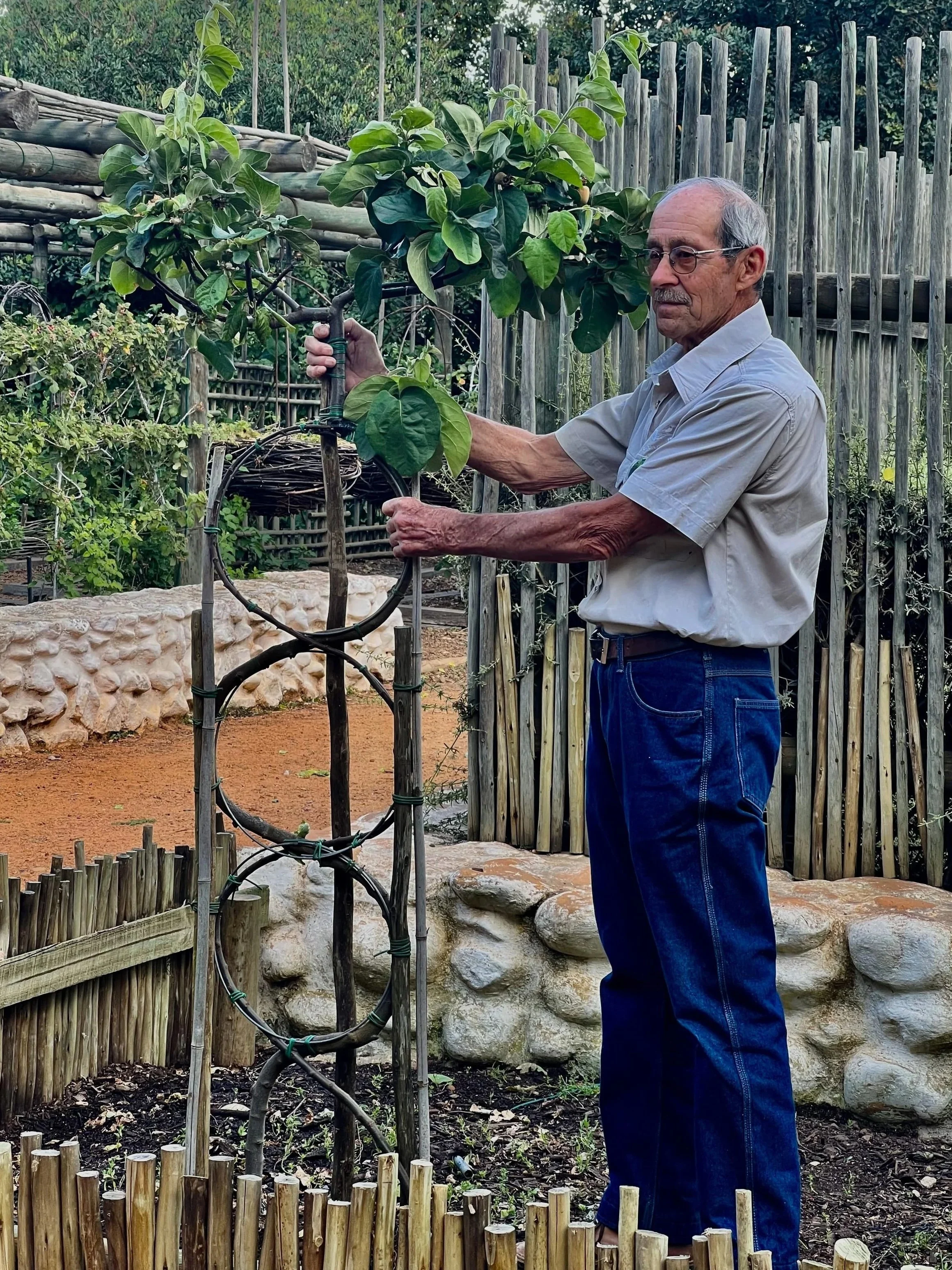
Oom Anton standing proud with a loop de loop grafted quince.
The Vegetable Gardens
March through June I was in the vegetable gardens, and this is where everything came together. Weed control, planting with proper spacing, sowing, harvesting efficiently — the fundamentals done right at scale. What stood out most was the commitment to no-dig principles and thoughtful crop rotation and companion planting. These aren't trendy buzzwords at Babylonstoren, it’s just how it's done in the display garden. On the border of the display gardens is the larger kitchen garden, or Moestuin, which supplies the world-class restaurant Babel. Many peaceful mornings began with collecting nasturtium and other edible plants in my woven basket to supply Babel with garnishes. The garden tools are stored inside of a duck enclosure, so the beginning and end of every day is always quite interesting.
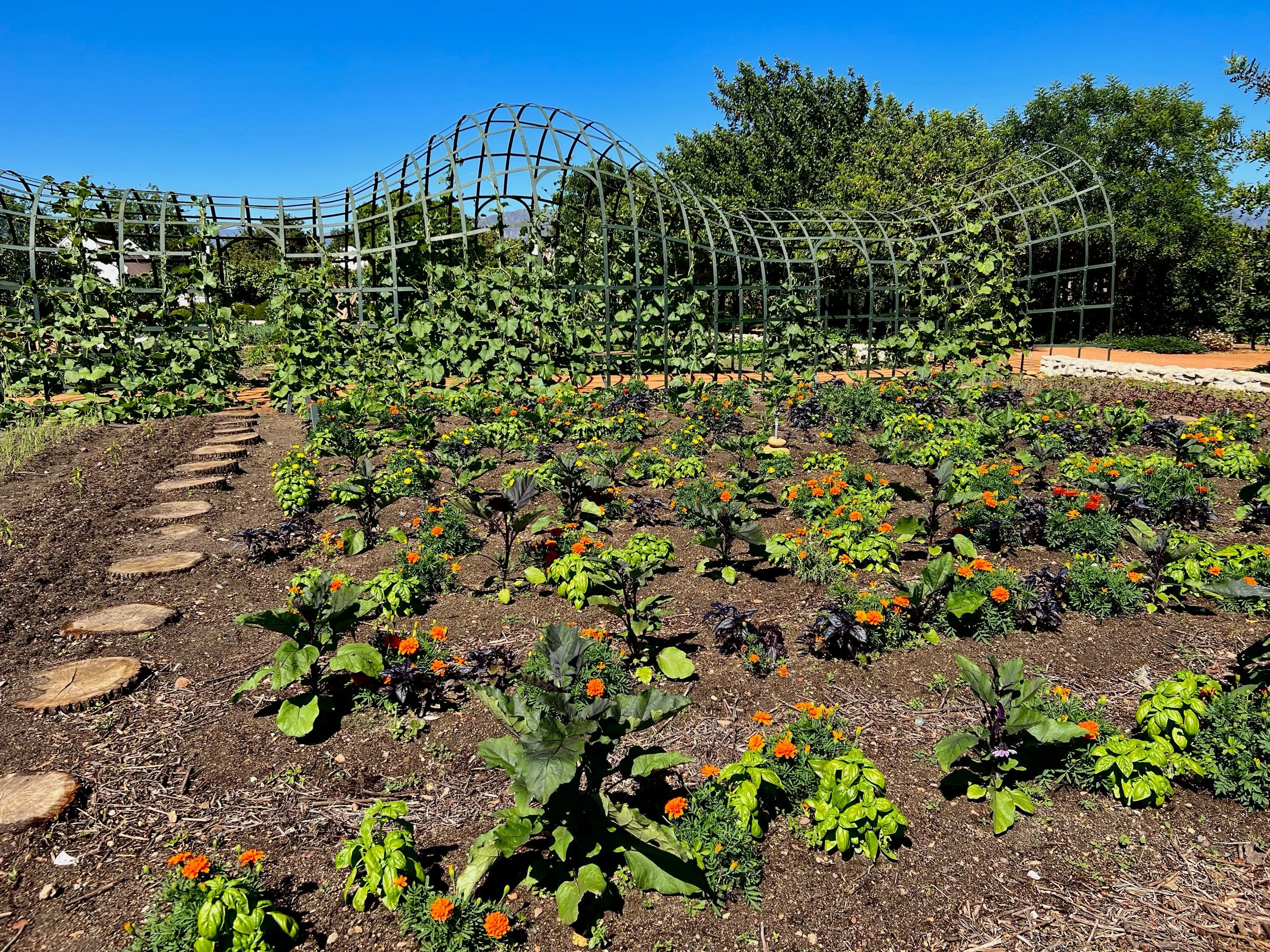
Calabash of all shapes climbing on “the snail”. Eggplant, basil, marigolds.
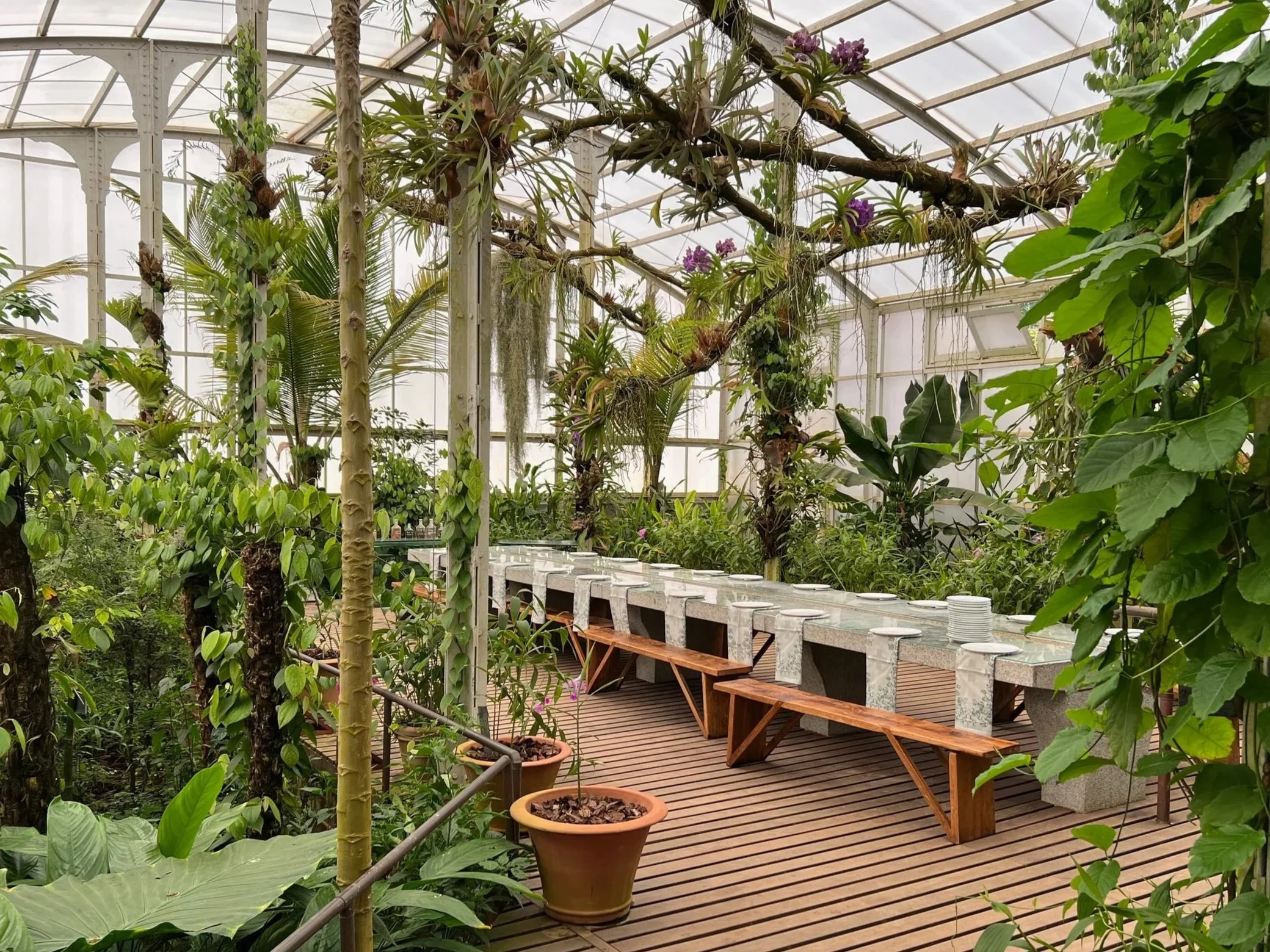
Spice House prepared for lunch service. Below the deck is a large cistern with fish (and the occasional silverware).
The Nursery
In February I moved onto the nursery, working alongside horticulturists Brent Reid and Nico van Jaarsveld. This was where the behind-the-scenes magic happened — soil mixing, making compost, sowing in trays, repotting, and keeping the glasshouse and spice house in order. I got to work with sub-tropical and spice plants, manage a huge Clivia collection, and learn the irrigation systems keeping everything alive. The walled herb garden is a show stopper that is bisected by a flowing rill, or channel of water, that runs beneath two wooden tea pavilions. The beds are laid out to treat ailments of the body from head to toe. Guests may pick herbs for a custom tea that suits their needs (and flavor palette). There's a quietness to nursery work that I really enjoy. It's methodical, patient, and deeply satisfying when things root and grow.
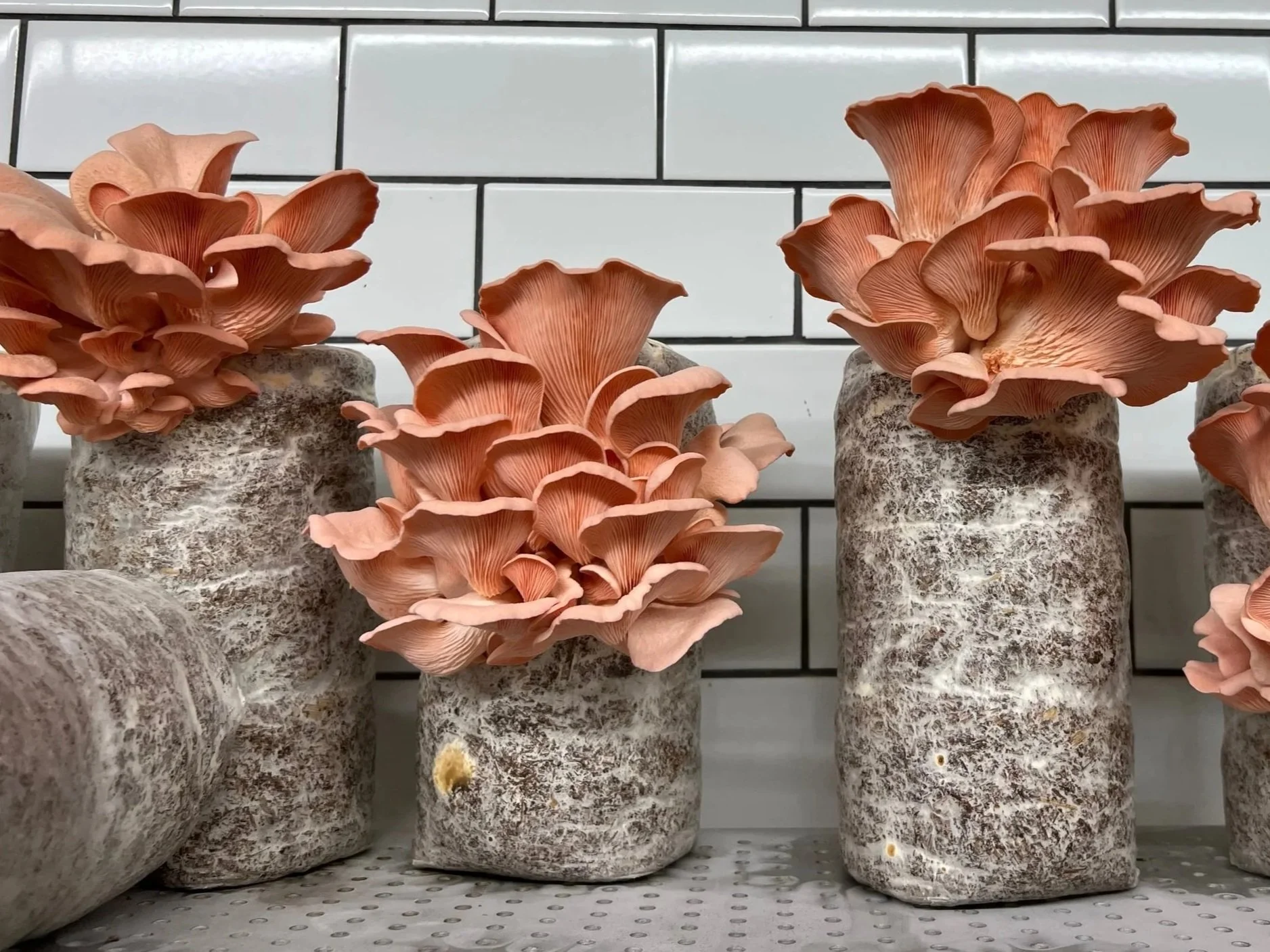
Pink oyster mushrooms ready for harvest.
Mushrooms
This one surprised me. Babylonstoren runs a dedicated mushroom operation and I spent time in February learning the full cycle — harvesting, room sanitization, care and upkeep, and fungal control. It's an entirely different world from the garden but it fits perfectly into the estate's philosophy of growing everything it needs. It was magical to watch the seemingly exponential growth of a pink or yellow oyster mushroom in just a couple day’s time.
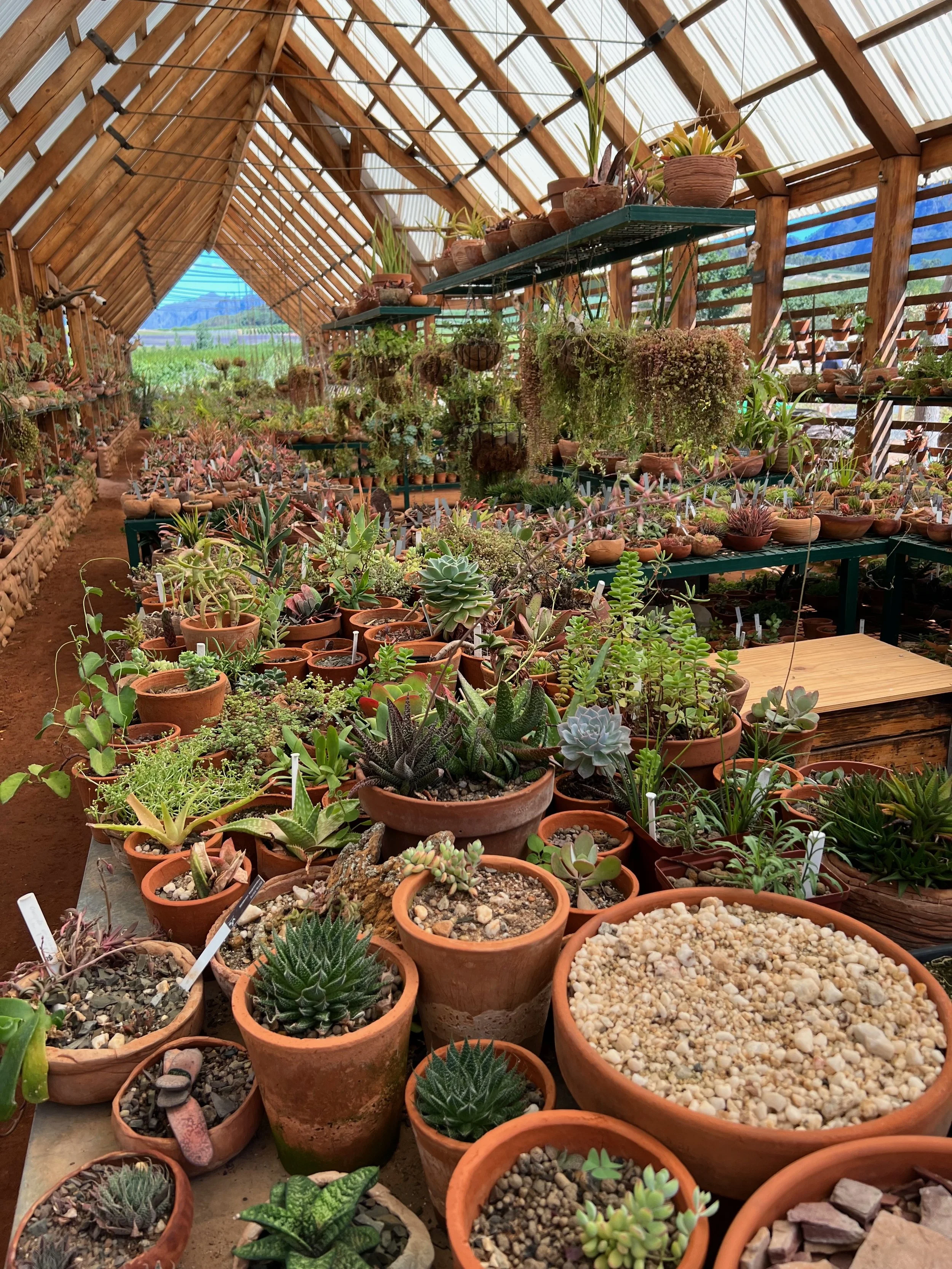
South African native succulent collection.
South African Indigenous Plants
Working with botanist Ernst van Jaarsveld in the indigenous succulent collection was one of the highlights of the whole experience. Behind the scenes tour of Kirstenbosch Botanic Garden, planting baobab trees, and rare succulent propagation under the guidance of someone who has spent a career studying these plants — that's not something you forget. The collection itself is unlike anything I had encountered before. The structures that house these collections are almost as beautiful as the plants themselves. The needs of the succulents varied widely - there were certain species that would not receive water for weeks straight- often plants collected from excursions to Namibia and other nearby countries.
a home away from home
Throughout my 6-month stay I gradually learned simple Afrikaans from the 50 or so members of the garden crew and greeting the 500 or so employees on the sprawling estate. With every morning beginning with a large huddle with very little English, I quickly learned to use my context clues to guess what task would be presented to me. Cutting eucalyptus, grafting apples, weaving willows, fertilizing citrus, planting Italian heirloom seeds, rescuing a Baobab tree - a day at Babylonstoren can not be predicted. This experience changed me as a horticulturist, a landscape designer, and a person.
