
Rock Gardens galore
Making Something from Nothing
On rock gardens, broken concrete, and slow looking
Every pile of discarded stone I drive past starts to look like potential. That's what rock gardens do to you. My fascination took hold in spring 2020, during an internship at Juniper Level Botanic Garden. While the world felt suspended, the garden was defiantly alive. Their rock garden plantings were unlike anything I'd seen — built with urbanite (broken concrete and masonry debris) and a soil mix incorporating Permatill, a lightweight expanded slate mined right here in Salisbury, NC. The medium drains fast, never compacts. Plants that would quietly rot in our heavy piedmont clay suddenly thrive, because the environment finally matches what they actually need
Places that get it right
Since my first exposure to these creative gardens, I've started noticing rock and crevice gardens everywhere. The best ones share a quality I can only describe as whimsical— they look wind-swept, eroded, like they arrived fully formed from somewhere wilder.

BABYLONSTOREN, SOUTH AFRICA
Native succulents in boulder pockets, echoing the rocky Simonsberg mountains above. Less linear crevices, more boulders!
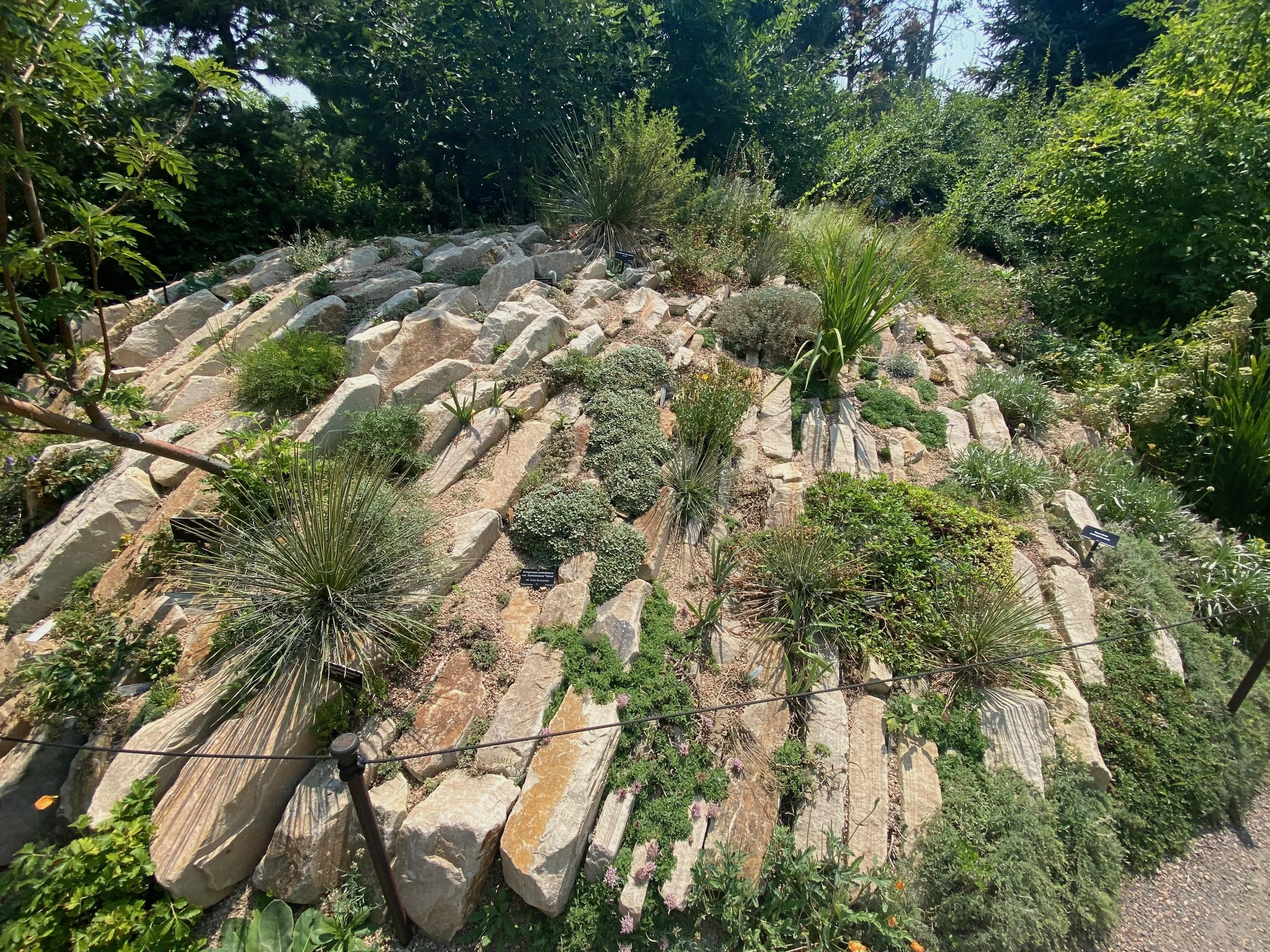
DENVER BOTANIC GARDENS, COLORADO
Colorado is home to many alpine plants that require extra drainage when placed in a garden setting.
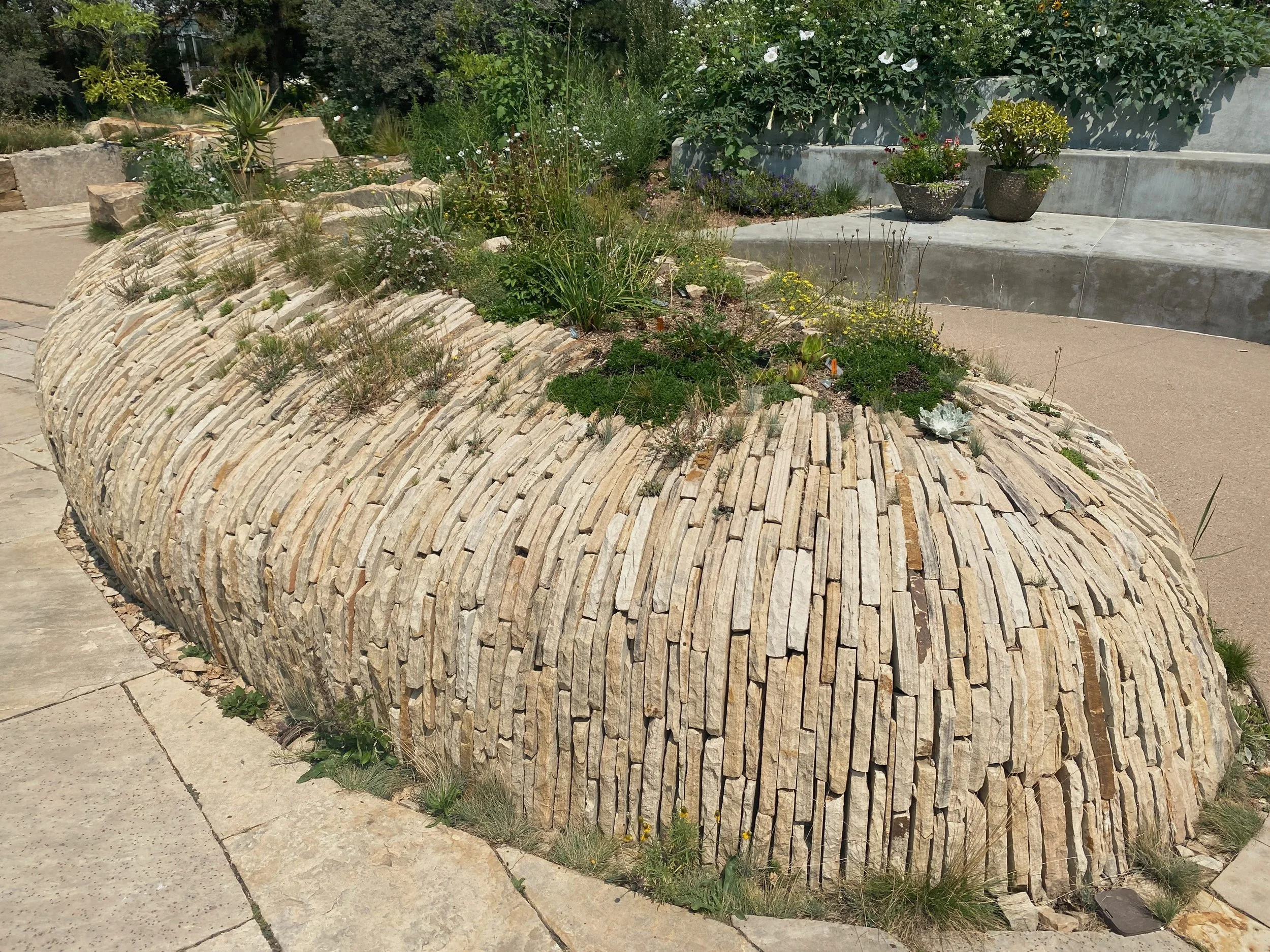
Large blob-like stone formations that stretch the limits of what stacking can do. Drainage dialed in for unique miniatures best viewed at eye level.
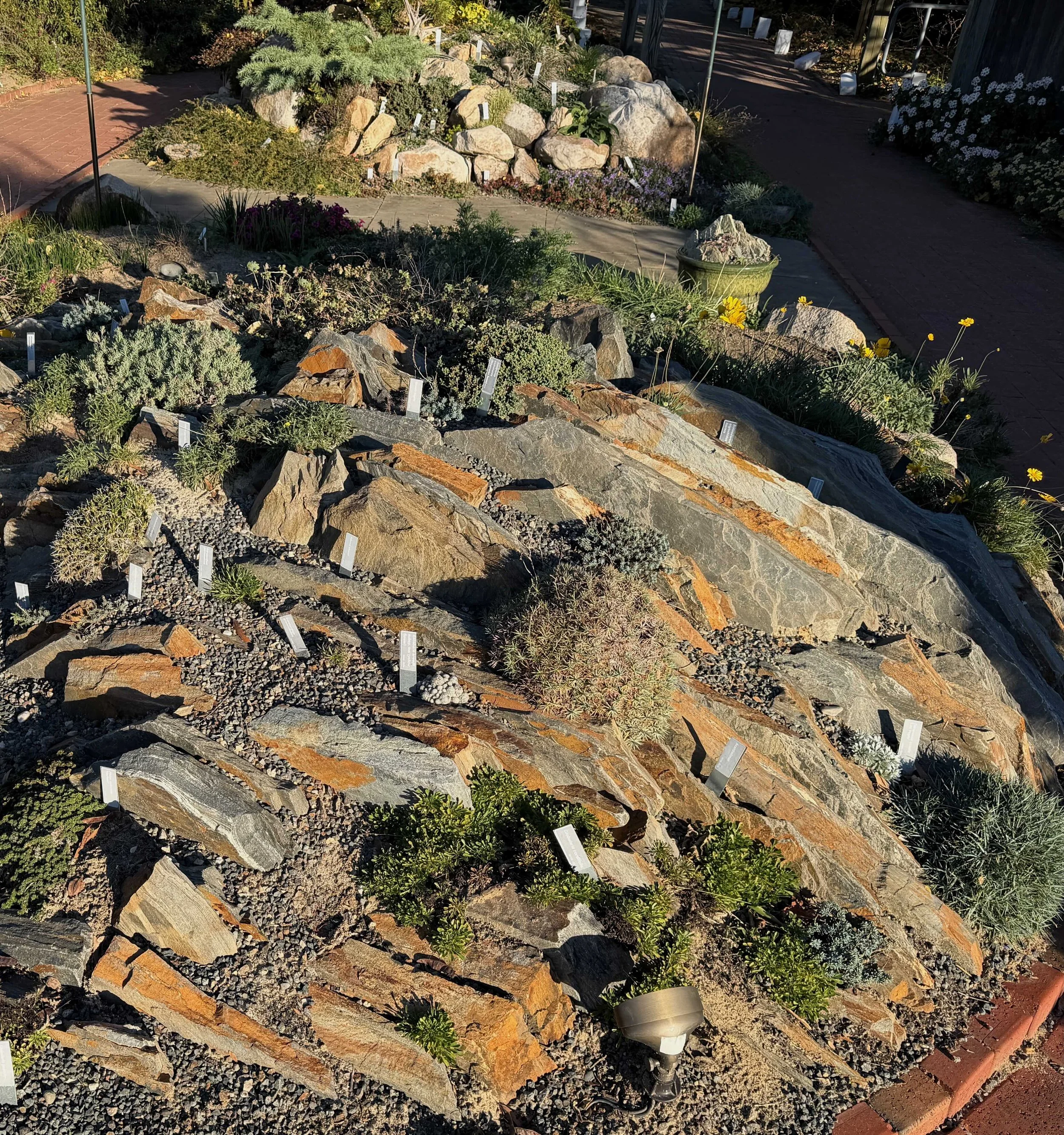
JC RAULSTON ARBORETUM, RALEIGH NORTH CAROLINA
A rooftop of gardens that rewards slowing down — dwarf trees, xeric plants, small intriguing details.
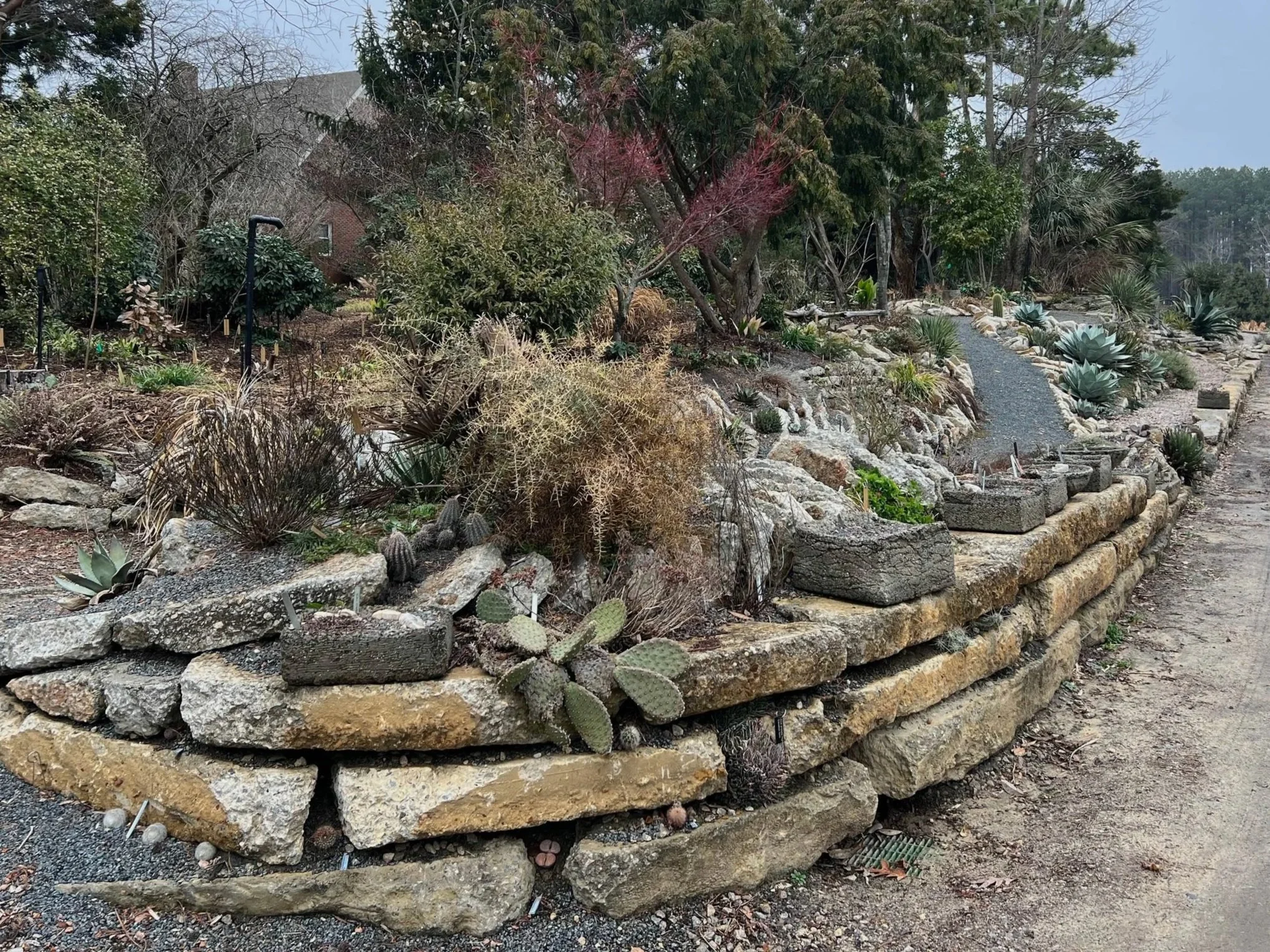
JUNIPER LEVEL BOTANIC GARDEN, RALEIGH
Crevice borders built from repurposed material. Scrappy practicality I deeply respect.
The MAgic material
One of the things I love most about this style of design is its resourcefulness. Broken concrete from a demolition. Fieldstone left over from another job. Random rubble that would otherwise be tossed. All of it becomes raw material for something genuinely beautiful.
The irregular edges, the imperfections — they create compositions that feel more natural than anything cut and uniform ever could. Stack it right, plant it thoughtfully, and it looks like it's always been there. There's an honesty to that I can't get enough of.
What it actually does
Beyond aesthetics, a rock garden is doing real horticultural work. Those tight crevices between stones create microclimates:
Warm pockets that buffer winter cold. Cool, shaded slots for sensitive plants. Fast-draining channels for rot-sensitive roots.
That last one is everything for xeric plants in the Triangle. Drainage is usually the difference between success and failure. Mix in Permatill — or #78 gravel as a more affordable substitute — and the plant palette opens dramatically. Alpines, Mediterranean species, South African succulents: plants from tough climates suddenly have a better chance here. But some of the most interesting crevice gardens I've seen aren't dry at all. Head up into the Blue Ridge and you find crevices that stay cool and moist all summer — little seeps where water moves slowly through stone. You can build for that too: Hexastylis tucked into a shaded crack, carex weaving through stone edges, dwarf pines anchoring the structure. Suddenly it's not a "rock garden" in the traditional sense. It's an ecosystem.
"Dry here, damp there, sun in one pocket, shade in another."
Real solutions
Rock gardens also solve real problems. A dry corner where nothing seems to take. That awkward edge between a patio and a planting bed. A mailbox begging for some low maintenance, high impact interest. These are exactly the spots where the vertical layering of rock adds depth and interest that a flat bed simply can't match, through every season (rocks can’t go dormant!)
It's one of my favorite things to build. It is an art that is unique to each person crafting it. The best ones feel like you didn't build them at all — like you just revealed something that was already there.
