
Gardening for Drought in THE Southeast
If you've gardened in the Southeast for any length of time, you've probably noticed a frustrating pattern: weeks without meaningful rain followed by several inches falling in a single afternoon.
While our region receives plenty of annual rainfall on paper, it often arrives in bursts rather than the steady, soaking rains that plants prefer. As temperatures continue to climb and weather patterns become less predictable, choosing plants that can handle both drought and downpours is becoming increasingly important.
The good news? A resilient garden doesn't have to look dry, sparse, or colorless.
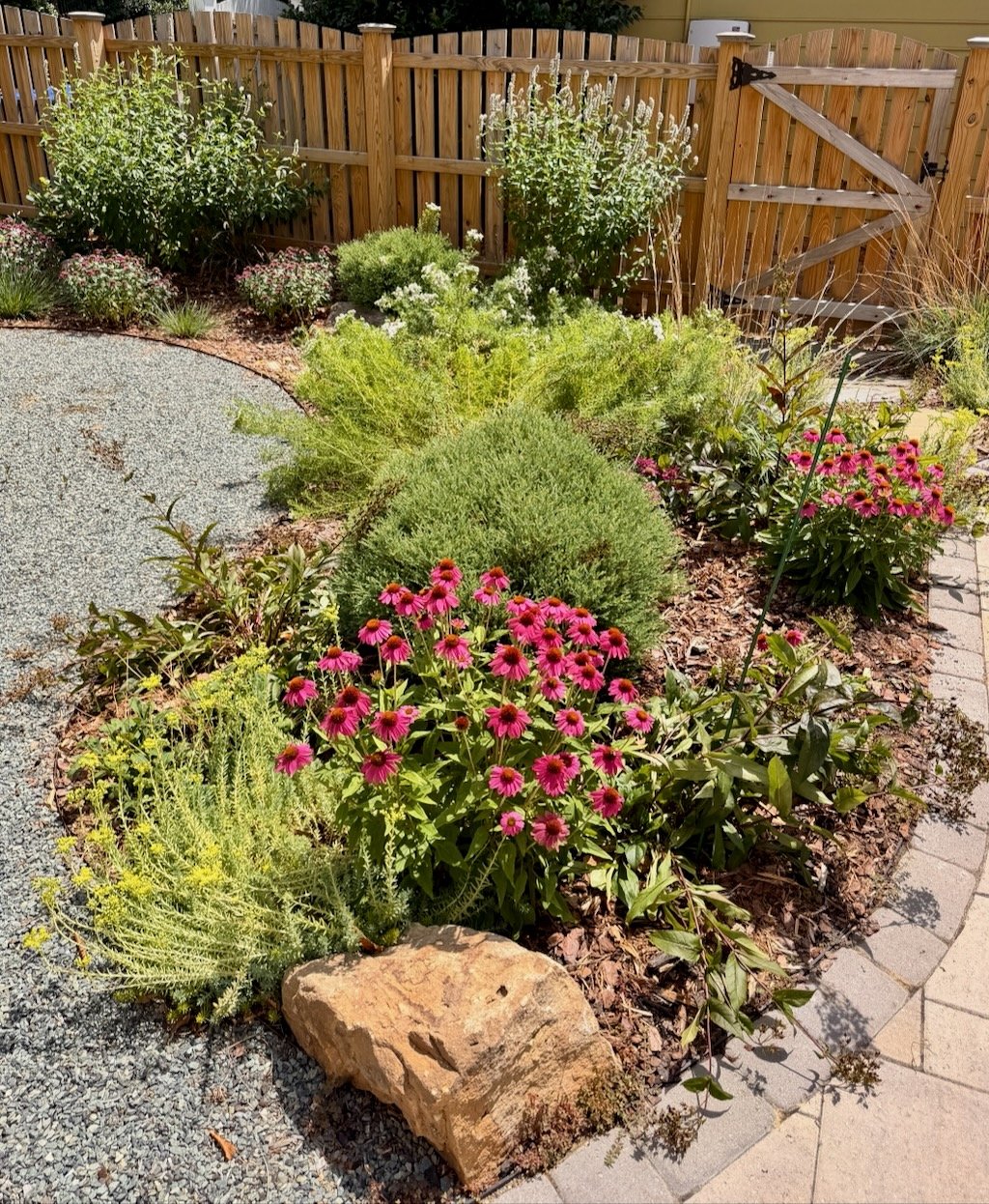
Echinacea purpurea, Thuja occidentalis ‘Pancake’, Pycnanthemum tenuifolium, Penstemon digitalis ‘Husker Red’
Start with Plants That Can Adapt
One of my favorite drought-tolerant perennials is Pycnanthemum tenuifolium (narrowleaf mountain mint). Its fine-textured foliage creates a soft, airy appearance while attracting an incredible diversity of pollinators. On a summer afternoon you'll often find native bees, wasps, and other beneficial insects covering the flowers.
For dependable summer color, Echinacea purpurea (coneflower) remains a standout performer. Its deep root system allows it to tolerate dry conditions while providing months of blooms and valuable habitat for pollinators and seed-eating birds.
If you're looking for fine texture, few plants compare to Amsonia hubrichtii. Its thread-like foliage creates a soft, almost shrub-like presence in the garden. It brings movement, structure, and exceptional fall color while requiring remarkably little maintenance once established.
Another favorite is Penstemon digitalis 'Husker Red'. The burgundy foliage provides season-long interest, and the white flowers are highly attractive to pollinators. Unlike the straight species, cultivars like 'Husker Red' and ‘Dark Towers’ tend to seed around less aggressively, making it easier to incorporate into designed landscapes without constant editing.
Water Smarter, Not Harder
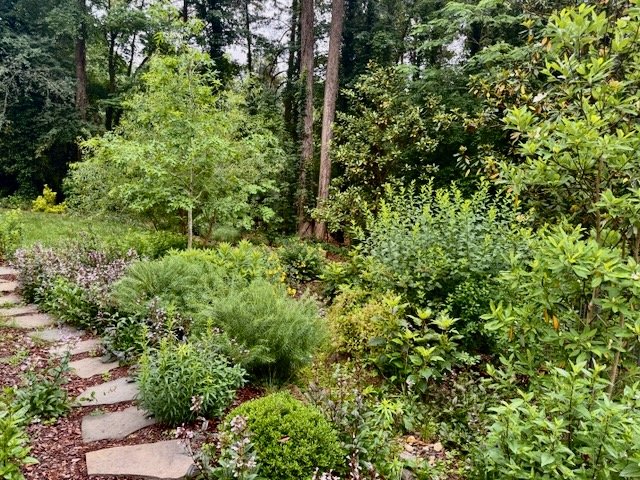
3 years after installation. No watering needed!
Many of the most beautiful native perennial plants are surprisingly tough once established. During their first two to three years in the ground, regular watering helps roots develop deeply and thoroughly. After that establishment period, many species can thrive with little to no supplemental watering outside of prolonged drought.
Even drought-tolerant plants need water while they're getting established. The goal isn't to eliminate watering entirely—it's to reduce the need for it over time.
Deep, infrequent watering encourages roots to grow downward in search of moisture. Frequent shallow watering often produces shallow root systems that are more vulnerable during dry periods.
For larger planting projects or properties where hand watering isn't practical, drip irrigation can be an excellent solution. By delivering water directly to the root zone, drip systems reduce evaporation, use less water overall, and help plants establish more efficiently.
Once a planting has matured—typically after two to three growing seasons—a thoughtfully designed drought-tolerant garden often requires very little supplemental watering except during unusually dry periods.
Designing for the Future
A resilient landscape isn't about creating a garden that survives drought. It's about creating one that thrives despite uncertainty.
By selecting adaptable plants, improving soil health, and using efficient watering methods during establishment, you can create a landscape that remains beautiful through dry spells, heavy rains, and everything in between.
In a region where the weather seems to change its mind every week, that kind of resilience may be one of the most valuable features a garden can have.
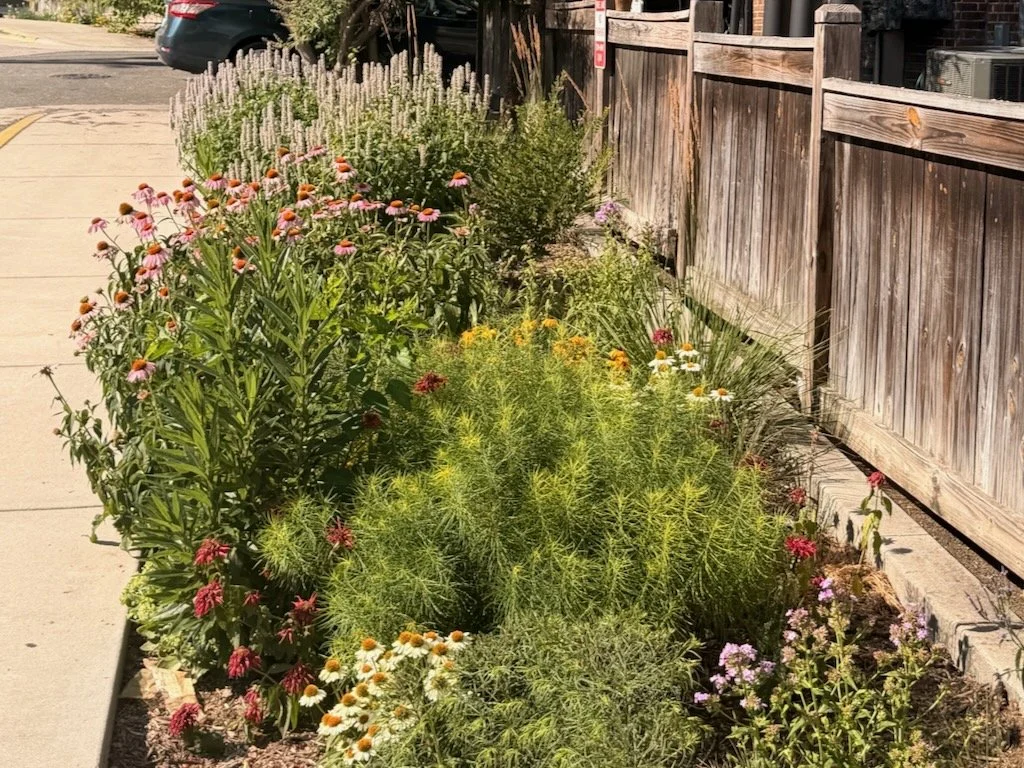
Echinacea purpurea, Amsonia hubrichtii, Agastache foeniculum
